

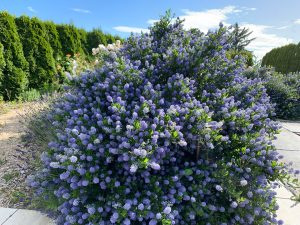
California Lilac
Ceanothus, or California lilac, is a vibrant, attractive flowering shrub native to North America and found across the West growing wild. California lilac is not really a true lilac in the genus Syringa, but it does produce amazingly fragrant blooms from late spring into early summer. This is the Ceanothus thyrsiflorus, sometimes know as Blueblossom or Blue blossom Ceanothus and is one of the most popular Ceanothus.
- Broadleaf evergreen shrub, 4-12 ft (1.2-4 m), stiff, upright. Leaves alternate, simple, glossy green, to 5 cm long, three prominent veins on the underside, tip obtuse to acute, margin sometimes gland-toothed. Flowers may range from blue to white, in 7.5 cm spike-like clusters. Fruit about 3 mm, glandular-sticky, slightly lobed.
- Sun, may freeze out in extra cold winter, needs good drainage, does best in alkaline soil. Easy to grow. Used for screen and background plantings in large spaces and on slopes.
- Hardy to USDA Zone (7)8 Found in the Coast Range foothills from Santa Barbara County, Calif. to Washington. Both white (e.g., 'Snow Flurry') and blue flowered cultivars available.
- thyrse: a type of inflorescence, a compact panicle-like inflorescence whose distal end is indeterminate and lateral branches determinate, e.g., lilac.
These flowers are amazing to humans as well as to the pollinators. Bees go crazy when the blooms are out, and that's why we have our hives just around the corner.
A great plus to being part of any garden is its ability to fix nitrogen in the soil. Every gardener should value plants that add back to the soil and helps the whole garden.
Beware though, if you have a pesky deer in the neighborhood it will love to dine on this shrub, so protection is required if you live in an area with these browsing animals.
You will notice we planted on a high mound. This area can get wet in the winter so we have a French drain below these mounds to prevent water from accumulating, because the California Lilac does best in well-draining soil, full sun and hates low wet spots that tend to gather moisture. In fact, after getting established, these shrubs will not require supplemental watering.
Prune lightly after flowering, and never cut back into old wood, as they rarely regrow.
Best time to plant is late fall through early winter. This allows the rains to aid in deep root growth which is needed to sustain the plant during the summer months.
Ceanothus is often reported to be short lived, but this is usually based on poor site selection. Poorly drained soils combined with frequent summer irrigation will kill the plant in a few years. If taken care of properly, these shrubs will live at least 25 years.
Gardeners should look for plants that attract birds, butterflies, hummingbirds, bees, and other beneficial insects. This shrub does it all. So plan on getting a Ceanothus thyrsiflorus in your garden soon . You will love it.